Table Of Content

This may reduce the sharp hair tips that can become embedded as ingrown hairs. Applying a warm compress prior to shaving can provide these benefits as well. People who are in the military or a police force also frequently develop ingrown hairs since they are often required to shave their facial hair frequently.
Complications of ingrown hairs
After the infection has cleared, you may have a scar or discolored skin that can last for several months. Don’t dig for the hair, as this increases the risk of causing or spreading an infection. Get the care you need from world-class medical providers working with advanced technology. If the hair is already visible and sticking out of your skin, you can attempt to tweeze the hair out. Learn more here about the development and quality assurance of healthdirect content.
Ingrown Pubic Hair: Causes, Treatment and Prevention Tips livestrong - Livestrong
Ingrown Pubic Hair: Causes, Treatment and Prevention Tips livestrong.
Posted: Tue, 01 Aug 2023 07:00:00 GMT [source]
What questions should I ask my healthcare provider?
Shocking: Ingrown Groin Hair Leaves Man In Coma With 4% Chance Of Survival - News18
Shocking: Ingrown Groin Hair Leaves Man In Coma With 4% Chance Of Survival.
Posted: Sat, 23 Mar 2024 07:00:00 GMT [source]
Avoid harsh, irritating ingredients while treating ingrown hairs, which can worsen irritation and inflammation, says Chang. She also recommends steering clear of homemade or DIY ingrown hair treatments like apple cider vinegar, which don’t work, in her experience. If ingrown hairs continue to form, see a healthcare professional to rule out any underlying causes. They may also recommend more permanent hair removal methods, such as laser hair removal, to help reduce your risk of ingrown hairs and bumps. If you often experience ingrown hairs and are looking for a long-term solution, laser hair removal has proven effective in treating ingrown hairs. Laser hair removal reduces the density and thickness of your hair by destroying specific hair follicles.
Ingrown Hair or Cyst
However, each individual may experience symptoms differently. The symptoms of an ingrown hair may resemble other skin conditions. Always talk with your healthcare provider for a diagnosis. In most cases, ingrown hairs usually heal themselves within one to two weeks with only minor irritation, as they eventually release from your skin as they grow longer. Infections can develop around the ingrown hair, causing pus formation, discoloration and pain, though. If you see signs of infection, you should visit your healthcare provider.
How to prevent ingrown hairs

Your health care provider is likely to diagnose ingrown hair by looking at your skin and asking about your hair removal habits. Some doctors believe that ingrown hairs also cause pilonidal cysts. These pockets of hair and skin debris usually happen at the base of your tailbone, between your buttocks.
What medications are used to treat ingrown hair?
These hair types are more likely to curl back into the skin when growing out after hair removal. It's not common, but you can develop a staph infection from ingrown hairs if they're not treated. Symptoms include a pimple at your ingrown hair's follicle, warmth or swelling around your ingrown hair, fever, or a general feeling of illness. When you have thick or curly hair, you can get a type of ingrown hair called pseudofolliculitis. The hair that grows back has a sharper edge, so it can more easily poke back through your skin and get trapped under the surface.
Redness may be harder to see on black or brown skin, but they may look a different colour to the surrounding skin. “I would recommend this be the first place to go for help with ingrown hairs,” says Dr. Bullard. Dermatologist Sherrie Bullard, MD, shares safe ways to get rid of ingrown hairs and how to prevent them from happening. Our experts continually monitor the health and wellness space, and we update our articles when new information becomes available. There will be a painful bump and swelling, and you may notice pus. Extrafollicular penetration can occur because shaving produces short hairs that are sharp enough to enter the skin.
Find a health service
You can then carefully remove the hair with tweezers (see below). The market has exploded with skin care products with different ingredients to help with ingrown hairs. However, it is important to note that improper shaving techniques and skin care practices can also contribute.
Since ingrown hairs can occur in any hair-bearing area, we note whether each product is meant for your face or body. Make sure to avoid removing hair in the area where you have an ingrown until it’s fully healed, experts told us. This article explains what an ingrown hair cyst looks like and why these bumps form.
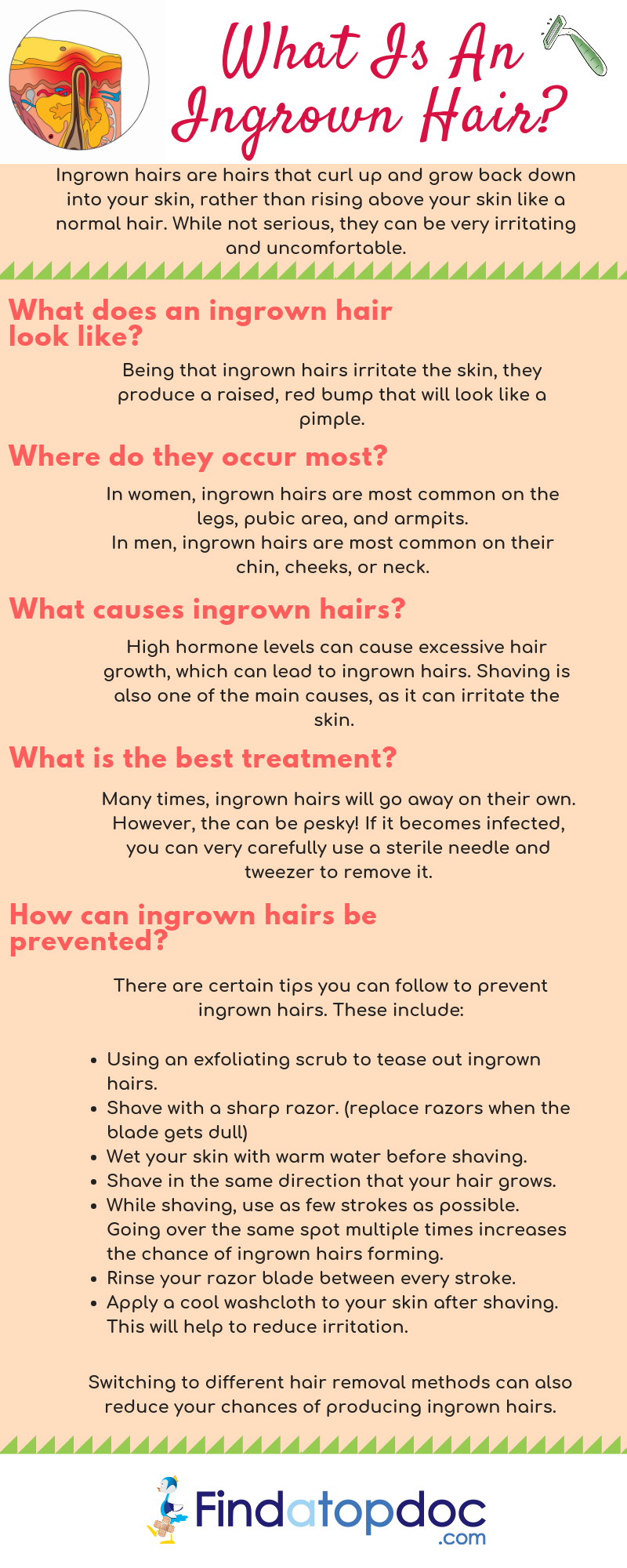
This article describes the symptoms and causes of ingrown hair as well as how they are treated at home or by a healthcare provider. It also looks at ways to prevent ingrown hairs and who is most at risk. This method will only work if you have one or two ingrown hairs and no other symptoms.
Thread the sterile needle, pin, or tweezers through the exposed hair loop. This removes a dead layer of skin cells and helps release ingrown hairs. Make small, circular motions to wash the affected areas with a washcloth, exfoliating brush, exfoliating gel, or scrub. If you shave, tweeze, or wax your hair, you can develop ingrown hairs. If you shave often, you're more likely to have ingrown hairs. You're also more likely to have them if you have skin of color or your hair is thick, coarse, or curly.
Topical tretinoin cream may thin out the epidermis, reduce the buildup of dead skin cells, and decrease hair embedding into the follicles. Topical corticosteroid creams are applied to reduce inflammation of inflamed ingrown hairs. Ingrown hairs most characteristically involve areas that are shaved, like the beard, bikini area, and legs.
An ingrown hair will often resolve on its own if you allow the hair to grow back naturally. For recurrent or severe cases, your healthcare provider may prescribe topical tretinoin, topical steroids, or electrolysis to manage your symptoms or prevent a recurrence. Proper shaving techniques can go a long way toward preventing ingrown hairs. In some cases, you may be able to see the hair at the surface of the bump. Ingrown hair cysts commonly form on the parts of the body that people shave, such as the armpits. Razor bumps from shaving (pseudofolliculitis barbae) are a type of ingrown hair cyst.
Bacteria can then take over and cause an infection known as folliculitis, which leads to the development of a cyst. Certain diseases or trauma to your skin can also cause them. You can’t always prevent ingrown hairs, but you can take steps to lower the chances of them developing.


No comments:
Post a Comment